Education programs

Drone and AI curriculum that turns curiosity into careers.

Drone Career Explorer and Future Ready AI give K–12 students hands-on learning in drone technology and AI literacy, with workbooks, video lessons and a path toward FAA Part 107 readiness.

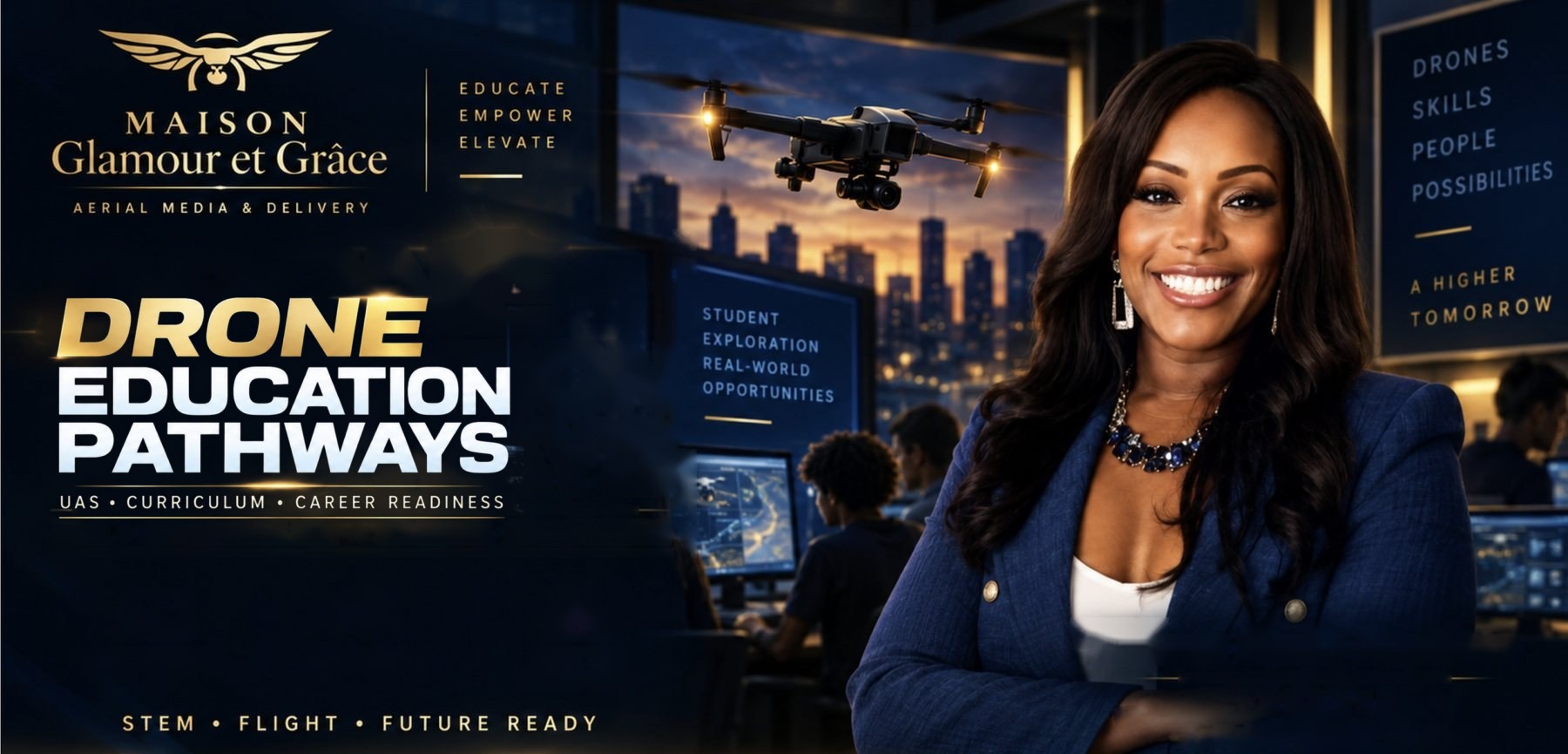
Drone Education Pathways

UAS • Curriculum • Career readiness

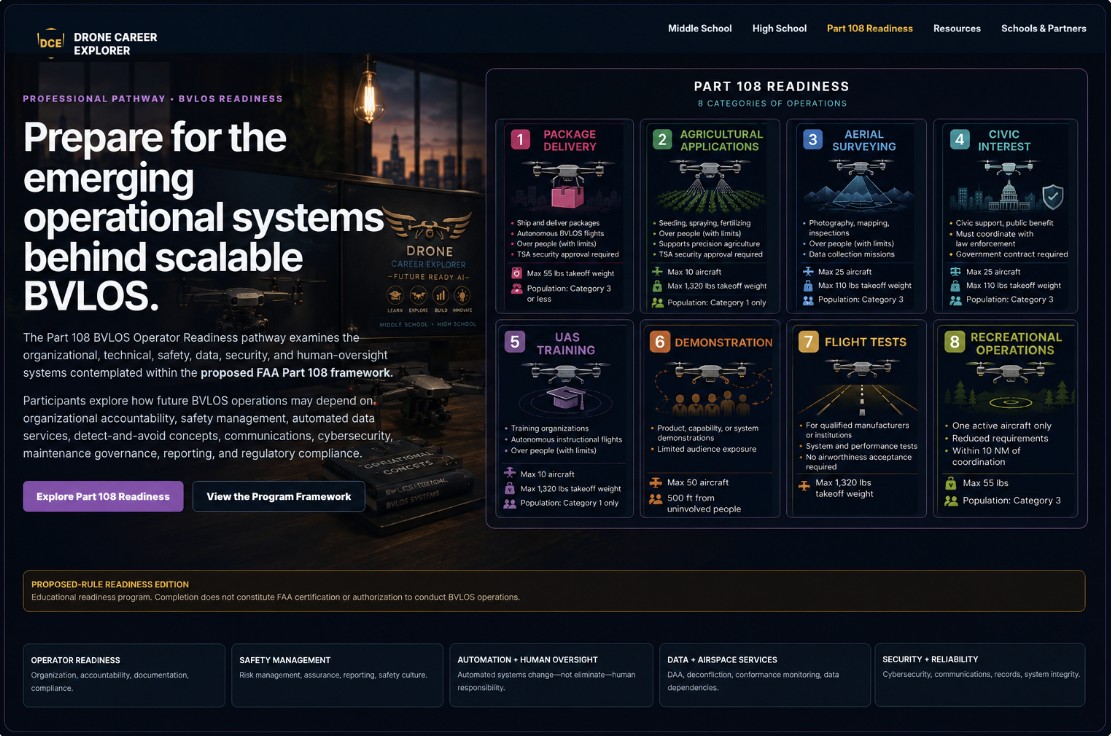
Drone Career Explorer is one connected path: students start in middle school, go deeper in high school, and, once eligible (age 16 or older), prepare for the FAA Part 107 knowledge test, with an advanced pathway for Part 108 and BVLOS readiness.

  1. Middle schoolGrades 6–8
  2. High schoolGrades 9–12
  3. Part 107 readinessRemote pilot prep
  4. Part 108 & BVLOSAdvanced operations
Drone Education Pathways: middle school, high school and Part 107 readiness

Course introduction · 2 min 14 sec · Captioned

Step 1 · Grades 6–8

Middle school

An engaging introduction to drone technology: how drones work, flying safely and responsibly, planning a mission, and the careers that use these skills.

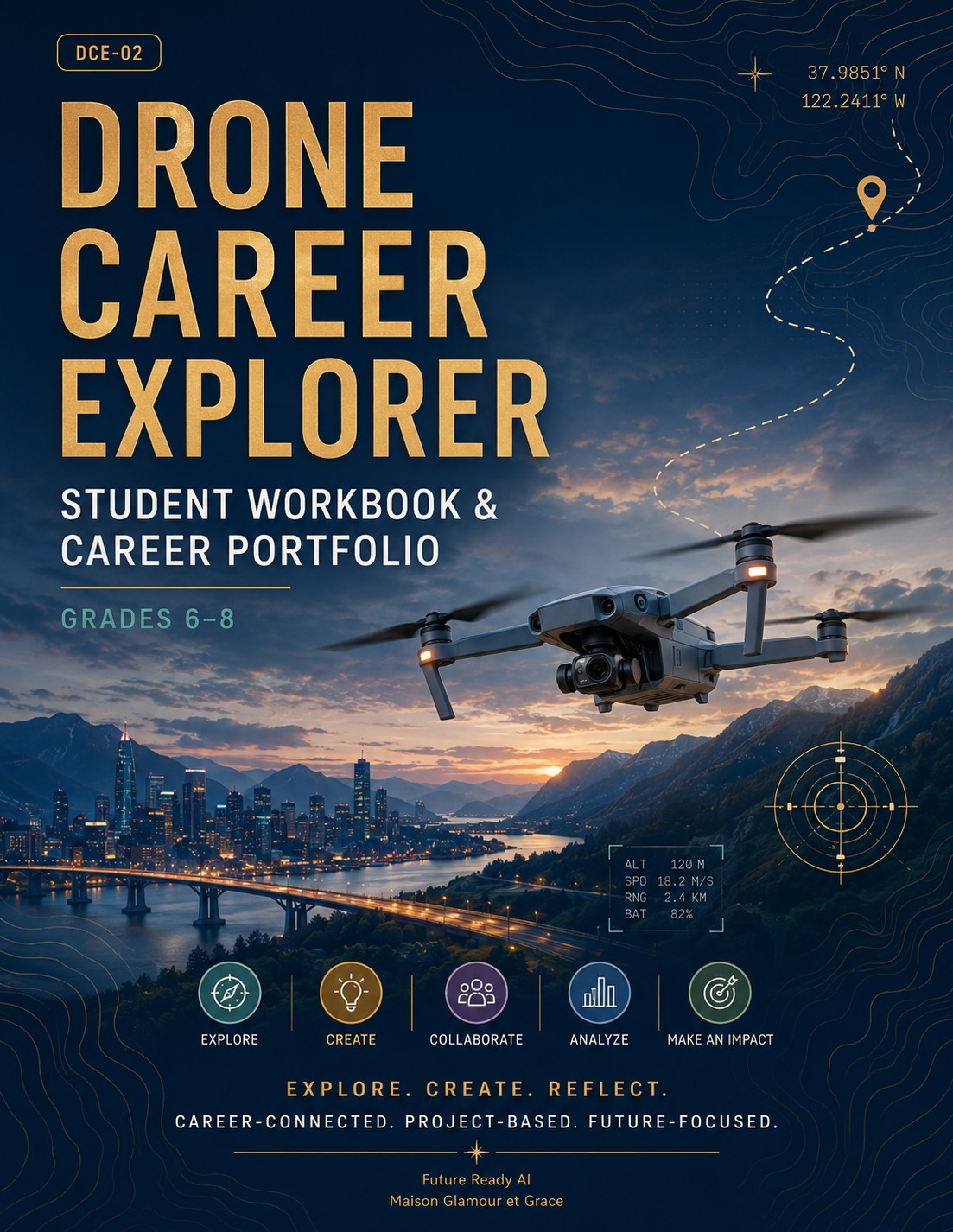
Drone Career Explorer middle school student workbook cover
Student workbook & career portfolioExplore · Create · Reflect

Course introduction · 2 min 14 sec · Captioned

Step 2 · Grades 9–12

High school

Students apply the system: mission analysis, AI, sensors and data, industry applications and workforce readiness, ending with a capstone mission proposal.

  • Mission analysis
  • AI + sensors + data
  • Industry applications
  • Workforce readiness
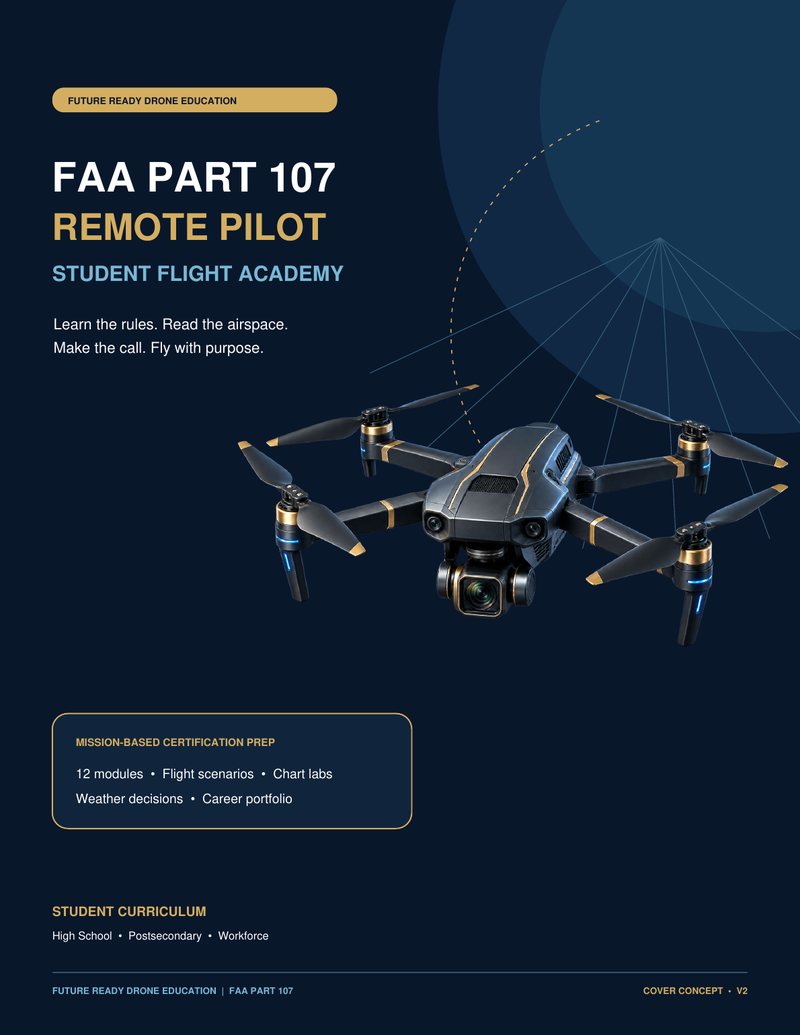
FAA Part 107 Remote Pilot student flight academy cover

Step 3 · Remote pilot prep

Part 107 readiness

Mission-based preparation for the FAA Part 107 knowledge test: the regulations, airspace, weather, loading and performance, and operational decisions behind the FAA Remote Pilot Certificate.

The FAA issues the Remote Pilot Certificate to applicants who are at least 16, pass the knowledge test and complete FAA and TSA vetting. Learn about Part 107 on the FAA site

Step 4 · Advanced operations

Part 108 & BVLOS readiness

BVLOS means flying a drone beyond visual line of sight. The FAA’s proposed Part 108 rule would create a standard framework for these operations, which today generally require an FAA waiver or exemption approved case by case. Our Part 108 BVLOS Operator Readiness pathway helps professionals and organizations prepare for the operating, safety, data and human-oversight systems the proposal describes.

Proposed rule · not yet in effect

As of September 2026, Part 108 is still a proposed rule. The final rule is under federal review and has not been published.

Drone Career Explorer Part 108 readiness overview showing the eight proposed categories of BVLOS operations

Operating systems

Roles, records, procedures and accountability.

Safety & human oversight

Risk management, reporting and responsible oversight of automation.

Data, security & reliability

Information handling, communications and operational resilience.

How the pathway is built

Fourteen modules in four phases, ending with industry applications and a readiness capstone. Materials are provided to partner organizations and participants, not published publicly.

  • Curriculum & instructor guide
  • Workbook & readiness portfolio
  • Assessment & capstone
  • Regulatory crosswalk
Proposed-rule readiness edition

Educational readiness only. Completing this pathway does not constitute FAA certification, operating authority, a permit, certificate, waiver or any other authorization to conduct BVLOS operations. Current pathways, including Part 107 waivers and Part 135 package-delivery certification, are separate.

Extension · Mapping & GIS

From flight to geospatial careers

Learners connect flight and data capture to photogrammetry, orthomosaics, point clouds, surface models and GIS, the bridge from flying a drone to mapping and geospatial work.

Illustration of a drone mapping survey: flight lines over a site with overlapping photo footprints and ground control points Survey mission Front overlap 75% · Side overlap 70% Altitude 200 ft · 5 ground control pts Flight lines Photo footprints Ground control Site boundary

FR Future Ready AI Learn. Create. Lead.

AI literacy that grows with every learner.

One developmental progression, from elementary foundations to high school responsible AI design. Students learn how AI works, how to check what it tells them, and how to use it to research, create and solve problems.

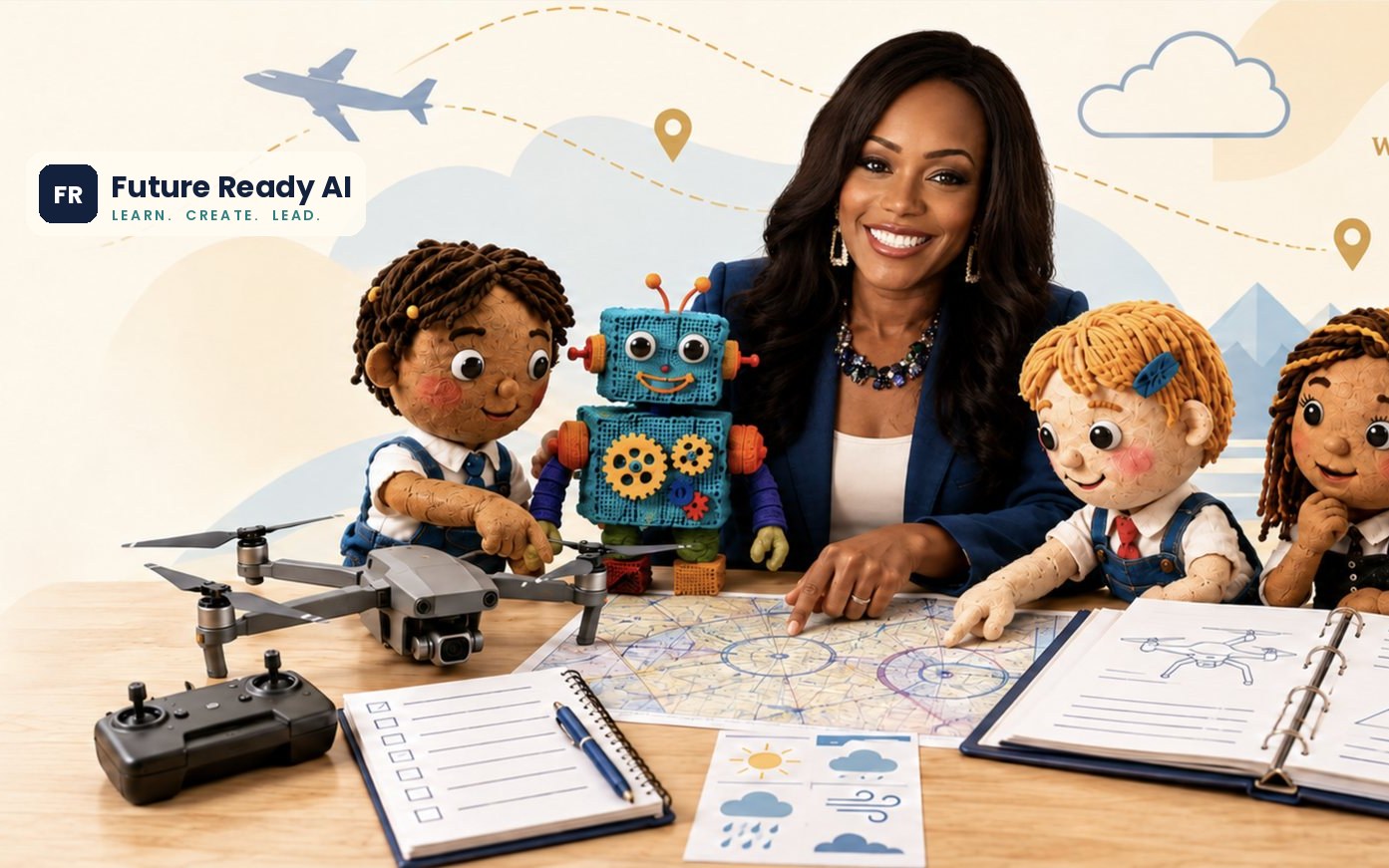
Future Ready AI: Andrea with student characters, a robot and a drone at a flight-planning tableView the curriculum ↗

Elementary

AI Discoverers

  • Grades 3–5
  • Six weeks

Notice · Protect · Check · Create

Students explore patterns, classification and everyday AI, practicing safe technology use, simple verification and creativity.

Students produceClassification rules, a responsible-use promise and Pattern Detectives artifacts.
Preview the AI Discoverers workbook

Middle school

AI Explorers

  • Grades 6–8
  • Eight weeks

Analyze · Audit · Verify · Evaluate · Design

Students examine how AI uses data and patterns, strengthen prompting and verification, and spot bias and privacy risks.

Students produceA system analysis brief, verification record and design recommendation.
Preview the AI Explorers workbook

High school

AI Innovators

  • Grades 9–12
  • Nine weeks

Research · Design · Solve · Lead

Students investigate bias, fairness and synthetic media, then design responsible solutions tied to real careers.

Students produceAn AI-use disclosure, risk register, prototype and capstone pitch.
Preview the AI Innovators workbook

Public previews show selected student-facing pages. Full workbooks, facilitator guides, answer keys and assessments are provided to partner schools.

Let’s build a stronger workforce together.

Whether you’re hiring, training, teaching or planning a project, start with what you need and we’ll suggest the right first step.

  • Employers and industryBuild a pipeline of people with drone and data skills
  • Workforce and community organizationsTraining and pathways into UAS and GIS careers
  • Schools and districtsCareer-connected AI and drone programs for grades K–12
  • Property and construction teamsAerial photos, video and site documentation